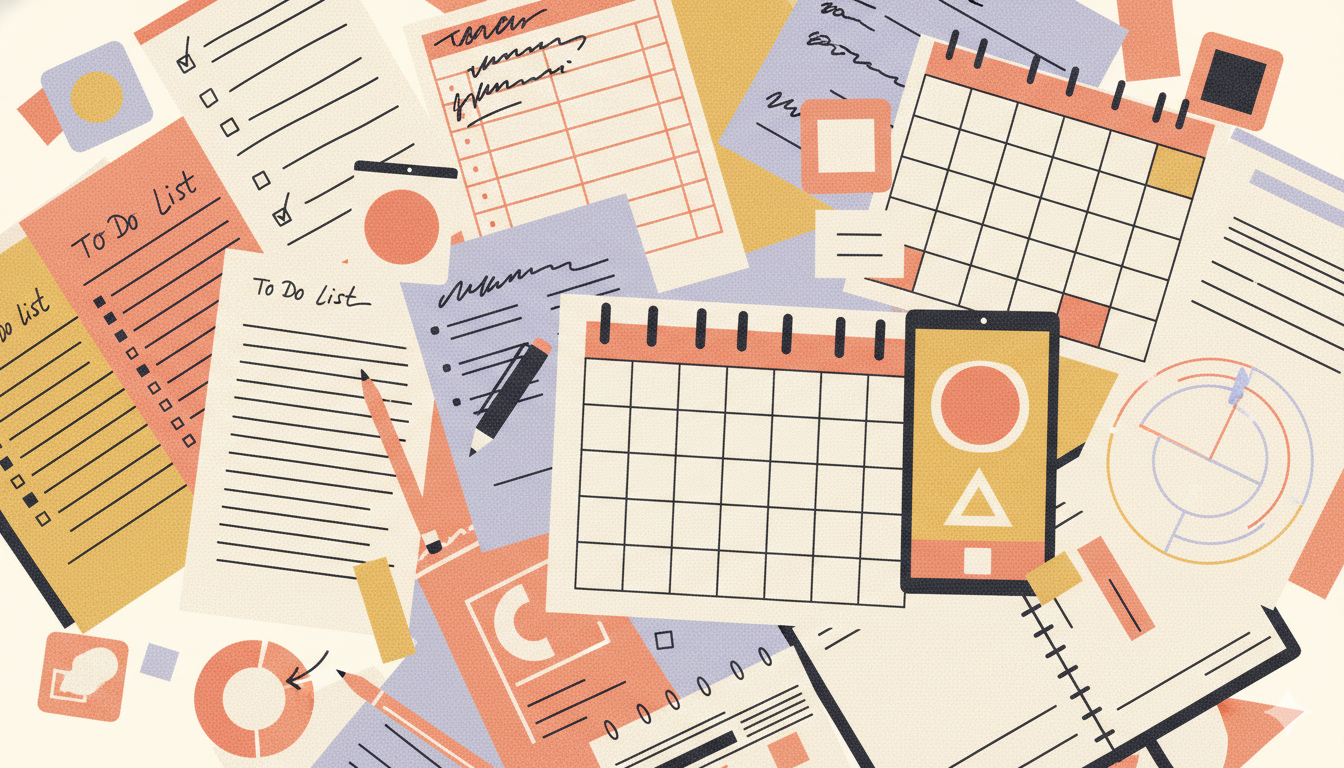
Forty-seven. I actually counted. That's how many productivity systems I've tried since my first job out of college. GTD, Pomodoro, Bullet Journal, Time Blocking, Eat the Frog, the Ivy Lee Method, Zen to Done, Kanban boards, the Eisenhower Matrix... I could keep going but honestly it's getting embarrassing.
Every single time, the pattern was identical. I'd discover a new system, usually through some glowing blog post or YouTube video. I'd get genuinely excited. I'd buy the notebook, download the app, set up the elaborate system. I'd use it religiously for somewhere between three days and two weeks. Then it would quietly die, and I'd feel like a failure.
This cycle continued for over a decade until I got diagnosed with ADHD at 32.
The Graveyard of Failed Systems
My desk drawer is basically a cemetery. There's a Leuchtturm1917 that has exactly 17 days of bullet journaling before the pages go blank. A Hobonichi Techo I imported from Japan - used for one week. Three different Moleskines from three different "this time will be different" attempts at GTD. Somewhere in a box, there's a Franklin Covey planner my dad gave me when I graduated. I think I filled in two days.
Apps weren't any better. OmniFocus, Things, Todoist, TickTick, Notion (oh god, the hours I spent building Notion systems), Roam Research, Obsidian. Each one promised to be The One. Each one became digital clutter within weeks.
Why GTD Nearly Broke Me
Getting Things Done was the worst. Not because it's a bad system - for some people, it's genuinely life-changing. But David Allen's approach assumes you can reliably capture every thought, regularly process your inbox, and trust your system to surface things at the right time.
Here's the thing about ADHD: I can't even trust myself to notice I'm hungry until I'm shaking. My working memory is basically a sieve. And "regular reviews"? My brain doesn't do regular anything.
I remember sitting at my desk one Sunday, trying to do my weekly review, surrounded by index cards and notebooks and printouts. I had items in my inbox from three months ago. The system had become a physical manifestation of my failure to keep up with life. I threw everything in the trash that night.
The Pomodoro Paradox
Pomodoro seemed perfect on paper. Work for 25 minutes, take a 5-minute break. Simple, contained, achievable.
What actually happened: I'd start the timer, finally get into flow around minute 22, and then the alarm would go off. Stopping felt physically painful. So I'd ignore it and keep working. Then I'd forget to take breaks entirely and burn out by 2pm. Or worse - I'd stop at the alarm, take my "5 minute break," and emerge from a YouTube rabbit hole two hours later wondering where my afternoon went.
The technique assumes you can switch attention on command. ADHD doesn't work like that. Getting started is the hardest part, and once I'm finally in motion, interrupting that momentum is actively harmful.
The Bullet Journal Situation
Bullet Journaling was seductive because it promised to be different - analog, flexible, personal. I watched Ryder Carroll's videos. I understood the rapid logging system. I bought the special notebook.
What I didn't account for: migrating tasks takes executive function. When I'd open my journal and see the same tasks I'd migrated forward for three weeks straight, it didn't motivate me. It made me want to close the notebook and never look at it again.
Also, the ADHD brain loves the novelty of setting up a beautiful new spread. It does not love maintaining the boring daily logging once the novelty wears off. My bullet journal became an elaborate arts and crafts project until suddenly it didn't, and then it sat untouched for months.
The Actual Diagnosis
I didn't seek out an ADHD assessment because I thought I had ADHD. I went to a therapist because I was exhausted from constantly failing at basic adulting. Couldn't keep a consistent schedule. Couldn't maintain systems. Couldn't understand why something as simple as "write things down and do them" felt impossible.
The diagnosis didn't magically fix everything. But it reframed a decade of "failure" into something more useful: these systems weren't designed for brains like mine. I wasn't lazy or undisciplined. I was trying to use tools built for a different operating system.
What Actually Stuck
It's been three years since my diagnosis. I've finally landed on a combination of things that works - most of the time. Nothing is 100%, and I've stopped expecting that.
External accountability over internal motivation. I can't rely on future-me to feel motivated. So I schedule co-working sessions with friends, use Focusmate for important tasks, and tell people about deadlines so the fear of social embarrassment kicks in. It sounds exhausting because it is. But it works.
Visible deadlines everywhere. My calendar is aggressive with reminders. Not one reminder - multiple, escalating reminders. Important dates get written on a whiteboard I see every day. Out of sight is out of mind, literally.
Embracing hyperfocus instead of fighting it. When I'm locked in on something, I don't try to stop for arbitrary breaks. I ride the wave until it ends. This means some days I work 12 hours on one thing and other days I can barely manage email. The average works out.
One capture tool, maximum simplicity. I use Apple Notes. That's it. No tags, no complex organization. Just a single note called "stuff" where things go. If something's important enough, it'll either get done or moved to my calendar with specific alerts.
Forgiveness built into the system. When I miss a day (and I will), the system doesn't punish me with accumulated debt. There's no inbox to process, no migrations to do. Tomorrow is a fresh start.
The Real Lesson
I used to think productivity meant finding the right system and sticking to it. The influencers and business books made it seem like discipline was just a choice. If I couldn't maintain a bullet journal, clearly I wasn't trying hard enough.
Now I understand that productivity, for me, means knowing my limitations and building around them. It means accepting that my brain will never work like the GTD testimonials suggest. And it means being okay with solutions that look janky or "wrong" to other people, as long as they actually work.
Those 47 failed systems weren't wasted time. Each one taught me something about what doesn't work for my brain. And eventually, through process of elimination, I found what does.
If you're still searching for your perfect system, maybe consider that it doesn't exist. Maybe the perfect system is the imperfect one you can actually maintain. Maybe productivity isn't about optimization - it's about self-knowledge.
Also, if you have ADHD and haven't been diagnosed yet, please go get assessed. It won't fix everything, but it might help you stop blaming yourself for things that aren't your fault.